
Garden-Style Housing: From US Mainstay to UK Opportunity
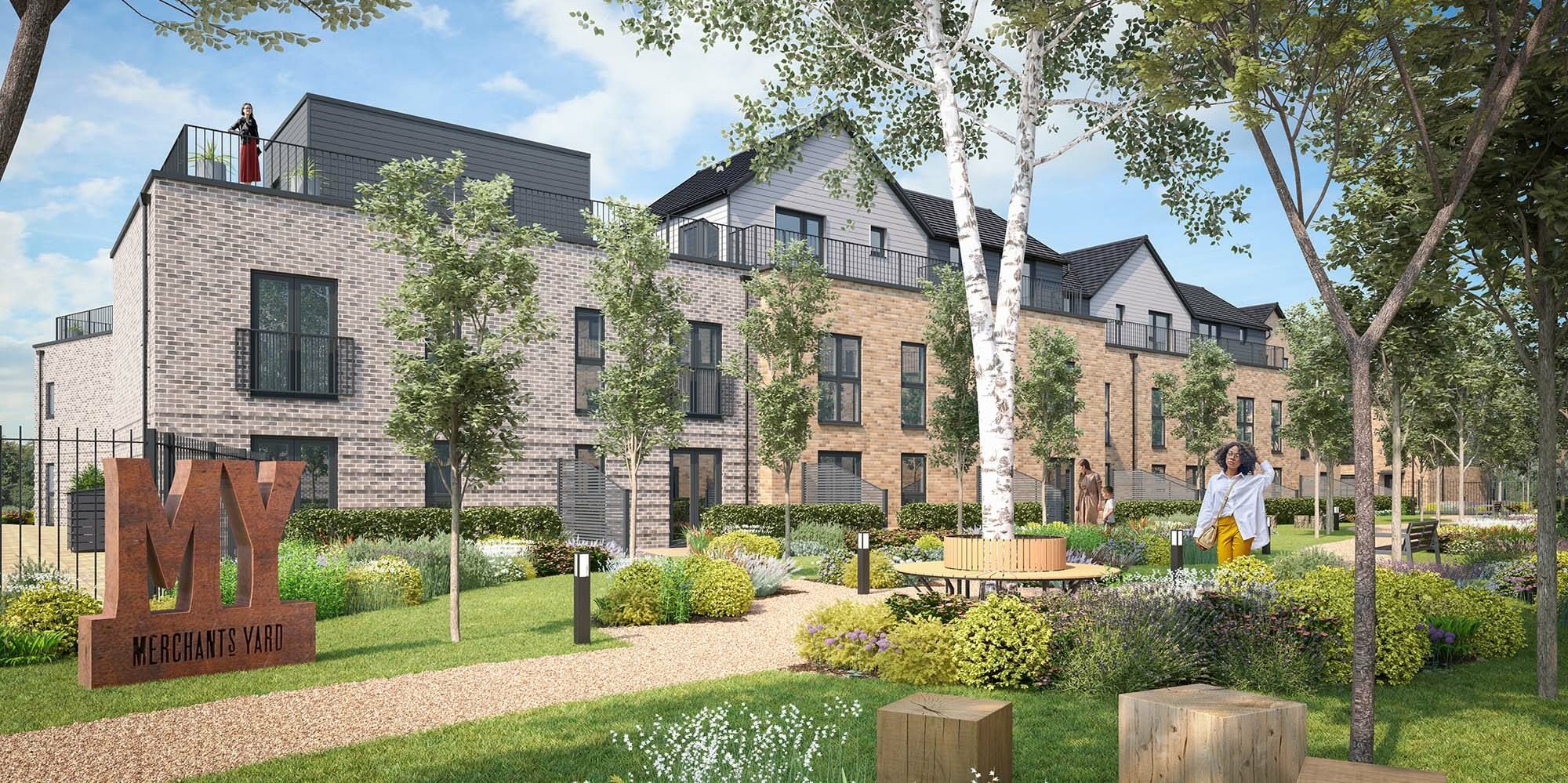
Merchants Yard, Ipswich
Source: Packaged Living
Author: Sarah Cole, Head of Research & Content
A shift in the BTR landscape: Thinking outside the tower
Since Build-to-Rent’s (BTR) inception in the UK over a decade ago the sector has largely been defined by its high-rise urban skyline. Multifamily housing (MFH) – typically large-scale, amenity-rich apartment blocks in city centres – has become the dominant format for BTR development. Whilst London has led the charge, regional cities, including Manchester, Liverpool and Birmingham, have quickly developed into flourishing BTR markets, together delivering tens of thousands of new homes and firmly establishing BTR as a mainstream tenure and a core part of the UK’s ongoing housing mix. Strong institutional appetite for this vertical model has helped accelerate much-needed housing delivery in dense urban cores and has played a critical role in driving professional management standards and reliable customer service in the private rented sector.
In more recent years, however, the delivery of high-rise multifamily towers has become significantly more complex and expensive than it was during the early phase of the sector’s growth. The Building Safety Act and associated Gateway planning process for tall buildings has brought additional design and construction requirements that have led to lengthy delays (currently taking an average of 36 weeks to secure Gateway approval on new build projects), additional costs and riskier programmes. Coupled with climbing construction costs and financing pressures, developers and investors are struggling to make new tower schemes viable and are now looking beyond this traditional delivery model to other BTR subsectors that offer greater financial feasibility, a quicker route to market and are more aligned with today’s regulatory and economic landscape. One subsector that is attracting a growing amount of attention as a more deliverable and scalable model is garden-style housing (GSH).
Learning from the US: GSH as the backbone of the rental living sector
GSH sits between the high density MFH within city centres, and suburban single family housing (SFH). Garden-style communities are low-rise (typically two- to three-storey), suburban or edge of town apartment developments built around shared landscaped spaces and communal amenities with surface parking often adjacent to buildings. Unlike the internal corridors and lifts found in traditional urban MFH, residents enter their homes via exterior stairways, covered walkways or individual entrances, creating a more ‘house-like’ feel and allowing direct access to the green space. The apartment layouts are often larger than in mid- or high-rise schemes and may be located near good schools, which is a key attraction for families who may not want, or be ready or able, to buy a home.
Whilst the concept of GSH is an emerging trend in the UK, GAA Living identified the opportunity for this rental housing format almost a decade ago, having witnessed the robust demand and rapid growth of this subsector in the US. As Dominic Martin, Managing Director, of GAA Living observed in his article, The Only Way is Not Up, back in 2017, “Whilst there is a high-rise urban living culture… the US market is in fact dominated by ‘garden-style’ low-rise apartment living.” He added, “These ‘stick and brick’ apartment communities are the favoured rental option for many middle income ‘grey collar’ American families.”
Having worked in the US multifamily sector for over 25 years before bringing his knowledge to the UK during the formative years of BTR, GAA Living’s CEO David Woodward recalls the emergence of GSH in his native country, “In the US, the emergence of garden-style communities mirrored the trend of US cities expanding out into the suburbs. Developers saw growing demand from renters and responded by building low-rise apartments near employment hubs, transport links and good school districts. They were cheaper and quicker to build, appealed to a broad demographic of traditional renters, families, older renters and key workers, and scaled up fast. Over time, they evolved into a fully institutionalised asset class – typically 200-400 units with a clubhouse at the centre – and today they’re not a niche product at all, they’re the dominant rental format across much of the country.”
A strategic pivot: Why GSH now works in the UK
With UK regulatory and economic conditions having recently become more challenging for high-rise MFH, the rental living market is now aligning to make GSH a compelling option for developers and investors. Low-rise schemes offer a feasibility advantage in that they allow for simpler construction methods and lower build costs compared with steel and concrete towers. Furthermore, without the scrutiny and delays associated with the Building Safety Act and Gateway system, the planning and construction process is simpler and more predictable, leading to shorter build programmes and allowing developers to bring forward large numbers of suburban/edge of town homes at a faster pace. As a long-term rental asset, the simpler building types also make ongoing maintenance of garden-style homes more straightforward to manage.
This ability to deliver at both scale and speed not only directly supports the government’s ambition to deliver 1.5 million new homes but also aligns with how and where the government expects new housing to come forward. Much of the government’s housing target is focused on urban extensions and regional growth areas, not just core city centre locations. Furthermore, rental living tenures are expected to play a significant role in the 12 new towns recently announced by the government, with some estimates suggesting it could account for a quarter of the homes to be delivered. GSH is ideally suited to these locations as it works well on larger parcels of land or as part of a broader mix of housing tenures, including private sale and affordable housing, and can be phased efficiently.
Lastly, from an operational perspective, the inclusion of large outside spaces, shared amenities and wide range of floorplan options supports longer tenancies and lower turnover than is typically seen in urban multifamily towers. According to RealPage 2021 data for the US cited in Resident Turnover Dynamics: A Comparative Analysis of High-Rise and Garden-Style Multifamily Apartments (mPro Digital Edge), garden-style communities demonstrated higher resident retention than high-rise properties – an average of 58% vs 51%. The dataset also showed that concessions were more prevalent in high-rise properties – circa 25% vs only 5% in garden-style communities, suggesting greater leasing pressure and higher turnover in taller urban assets. RealPage attributed these differences partly to the demographic and lifestyle characteristics of garden-style residents who are more often family-oriented (children go to local schools), price-sensitive and tend to remain longer in place.
GAA’s perspective: Revisiting the call for low-rise BTR
In his 2017 article, Dominic asked a question that now feels prescient: “Could a low-rise approach to the rental market play a part in solving the UK housing crisis?” He argued that “the only way is certainly not up”, noting that high-rise towers were not suitable for all renters and that families seeking suburban lifestyles were underserved.
The recent growth of the SFH sector shows that the UK market has already started to respond to growing demand for suburban rental accommodation. As affordability pressures push more households out of city centres, SFH is increasingly providing families with the space, privacy and lifestyle they desire, while giving investors access to stable, long-term rental income streams. Institutional investment into SFH has expanded rapidly – accounting for 46% of total rental living sector investment and just under a fifth of completions so far this year, up from a tenth in 2021 (Knight Frank) – with many schemes now forming part of large mixed-tenure masterplans.
However, while SFH will continue to play an important role in the rental living sector, GSH offers several advantages over single family portfolios. Firstly, it achieves greater density on the same amount of land, accommodating more households whilst maintaining generous communal green spaces and amenities. As Dominic wrote, “150 individual homes could accommodate 200 units in low-rise apartment blocks, but with the shared clubhouse and external amenities. It’s about carefully crafting the use of space… without compromising on the residual land value.” This allows developers to make more efficient use of land, which is crucial in a constrained planning environment.
Secondly, unlike SFH where homes are often dispersed across large sites or even multiple neighbourhoods and are often originally designed as a ‘for sale’ product having been offloaded by housebuilders, GSH is concentrated and designed with renters and long-term management in mind. This brings both operational and community benefits – stronger branding opportunities and a dedicated on-site team providing consistent service and more efficient management and maintenance, as well as a centralised amenity provision, which supports stronger resident engagement and a more cohesive community environment.
In many ways, SFH has paved the way by proving the depth of suburban rental demand and appetite from institutional investors. GSH takes this concept further by combining the lifestyle appeal of more spacious, outdoor-focused living with the density and operational strength of MFH, offering an alternative strategic solution to scaling suburban rental housing.
The next chapter for UK rental housing: Opportunities for the next decade
By taking a fresh approach to suburban planning and borrowing from the model we see working so successfully in the US, GSH has the potential to become a powerful regional growth engine for the UK rental living sector. Local authorities are well placed to integrate this model into masterplans and urban extensions.
Institutional investors are starting to pivot toward these suburban and edge of town rental models, attracted by their appeal to renters, their reliable, long-term income streams and relative ease of planning and delivery compared with high-rise MFH towers.
Early UK examples of GSH are already demonstrating the model’s viability. Packaged Living, one of the UK’s leading sustainable living specialists, has delivered schemes such as Merchant’s Yard in Ipswich and Origins in Cambridge, with more expected as the market matures.
Jonathon Ivory, Chief Investment Officer at Packaged Living, notes that while the business draws important lessons from US garden-style communities, its approach is intentionally adapted for UK conditions. “In the US, garden-style housing is typically three- to four-storey walk-up apartment buildings designed for the grey-collar demographic, often car-dependent and tied to major employment anchors like airports, shopping malls, theme parks and hospitals. Our UK version is nuanced – employment is only a short walk/commute, and the product is fundamentally housing-led (as opposed to apartment-led). Our GSH town-homes are located in fringe-urban locations and designed for people who require more space than city centre apartment living can offer, but still want easy access to the jobs and amenities prevalent in towns and cities,” he explains.
Packaged Living’s interpretation prioritises three- and four-storey townhouses alongside apartment buildings, allowing for more efficient land use on brownfield regeneration sites. Outdoor space is re-imagined – large private gardens associated with SFH are often replaced with roof terraces or shared landscaped areas – while maintaining a strong emphasis on quality. Ivory highlights that GSH resonates with a broad demographic, especially those for whom urban high-rise living is no longer suitable but who are not ready to relocate to distant, car-dependent suburbs.
Ivory adds, “Garden-style BTR makes operational sense too — horizontal construction, no amenities, more efficient buildings and a community-led design approach make GSH more cost-effective to build and operate while still delivering strong resident satisfaction.” He also notes the positive response from local authorities: “These projects are typically on brownfield or former (light) industrial sites that need regeneration, so they are being well received by planners.”
With proof of concept now established, Packaged Living is preparing to scale the model nationally. As Ivory puts it, “We see GSH becoming a core part of the national rental housing mix. It fills the ‘missing middle’ between city centre MFH and suburban SFH, and it’s exactly the kind of product the UK needs more of.”
Conclusion: A model whose time has come
Garden-style housing is not a new concept. GAA recognised its potential in the UK almost a decade ago, having witnessed firsthand the growth of the US sector into a successful institutional asset class. Today’s regulatory, economic and planning environment makes this model more relevant than ever. As the UK BTR sector matures and the delivery of vertical towers becomes increasingly challenging, garden-style schemes, along with single family housing, will be central to delivering rental housing at scale, supporting a wide range of renter types including families and key workers, and diversifying the living sector investment landscape.
Ronak Rawal, Senior Director, GAA further supports this through current client activity, “GAA is currently working with a number of large housebuilders in the UK, all of which are addressing their delivery targets by turning their attention to a BTR offering. The location and scale of their sites ideally lends itself to a suburban and garden-style model; however, there is still a way to go to optimise these developments to deliver a future facing, sustainable rental community. It’s time to broaden our housing horizons and step up to meeting the needs of our future renters.”