
More service is not always more value: GAA at the OpRE Summit 2026
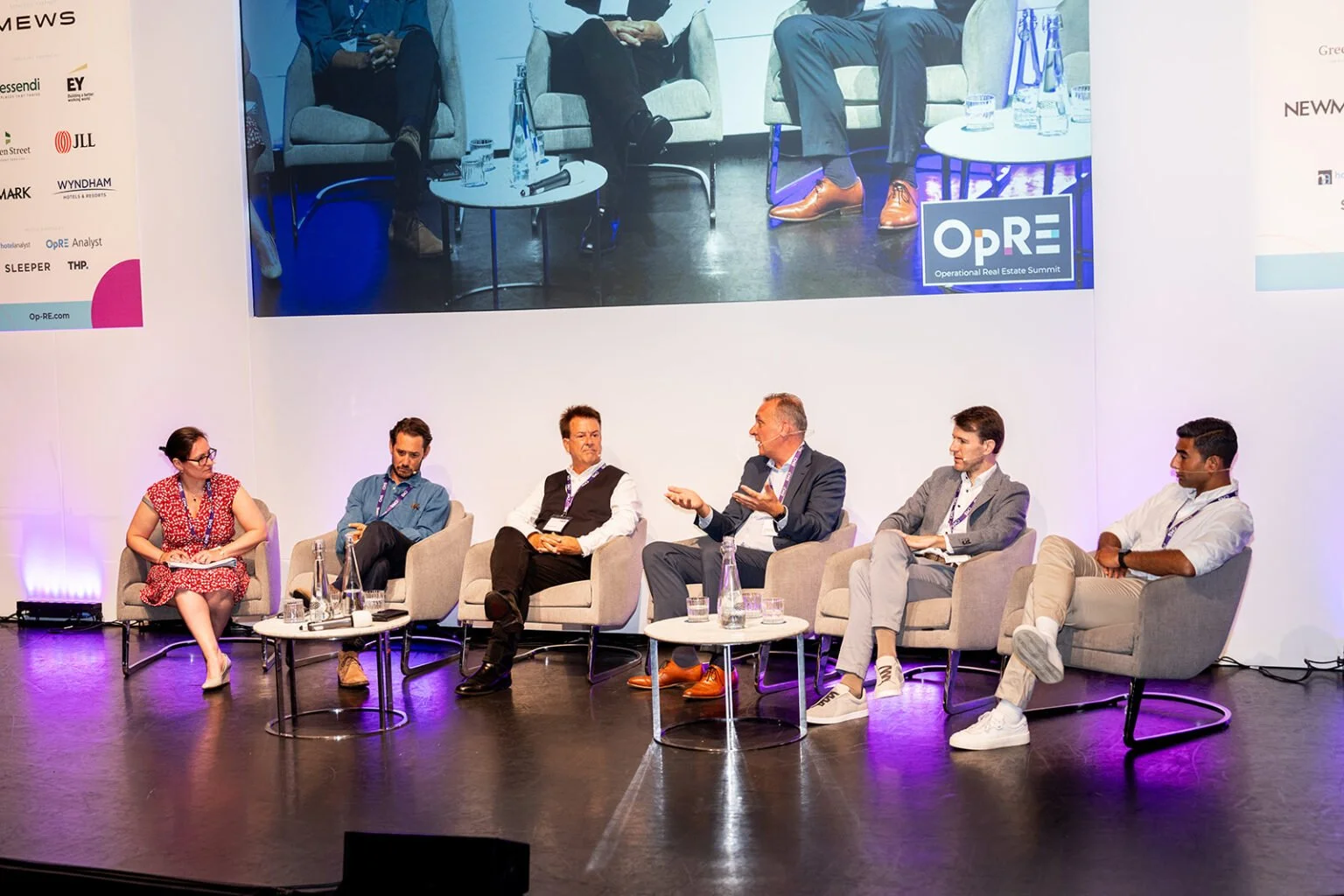
GAA Living's Ronak Rawal, Senior Director, joined the operational real estate debate at the OpRE Summit 2026. His message was a commercial one. Doing more is not the same as being worth more.
Operational real estate has spent a decade adding service. Concierge teams, community managers, events programmes and ever larger amenity packages have moved out of hotels and into build-to-rent, later living and student housing. The assumption has been that more service produces more value.
At the OpRE Summit 2026 in London, a panel of operators and investors pushed back on that idea. GAA's Ronak Rawal was among them, and his contribution went to the heart of the numbers.
Culture matters more than headcount
Payroll is one of the largest operating costs on any operational asset. The instinct, when an operator wants to lift customer service, is to add people. Ronak challenged that reflex directly.
"You don't need to invest heavily in payroll to deliver a good customer service," he told the panel.
His point was that service quality is set by culture, not by headcount. Buildings with relatively modest amenity provision are still achieving rental premiums and strong renewal rates, provided residents feel part of a community they want to stay in. A larger team does not guarantee a better resident experience. A well-run team, in a well-run building, tends to deliver both.
The panel reached a similar conclusion
Other speakers arrived at the same place from different sectors.
The strongest challenge came from the residential side, where one operator questioned whether the industry had started to confuse activity with satisfaction. His argument was that residents rarely write reviews about amenity lists. They write about the person on the front desk, the resident manager, or a good neighbour. The relationships that drive retention are human, not architectural.
Later living made the same point. What residents value is often far simpler than the expensive partnerships and lifestyle offers used to market a scheme. Get the wellbeing team, the maintenance staff and the concierge right, and the rest follows. Get them wrong, and no amount of amenity compensates.
Hotels face the identical discipline. Operators have to separate service that a guest will pay for from service that simply inflates the cost base. Extra cost does not automatically earn a premium. The task is to find where additional service genuinely creates retention, higher rates or repeat business, and to stop paying for the parts that do not.
Technology fitted the same logic. AI was discussed less as a way to replace people and more as a way to remove administrative work, so that staff could spend more time with customers rather than with paperwork.
The GAA view
For years the sector has added services on the assumption that operational assets command higher valuations, so more operations must mean more value. That logic risks becoming circular. If every scheme adds the same concierges, lounges, events and apps, none of them remains a differentiator.
The assets most likely to outperform are not those spending the most on operations. They are those spending with the greatest discipline. Service is easy to add. Pricing power is much harder to earn. Investors should be looking as hard at operating margins as at resident satisfaction, because the two are only aligned when service is chosen deliberately.
This is the core of our asset optimisation work at GAA. We review the service and amenity mix across operational living assets, model the opex against genuine resident demand, and identify where cost can be reallocated towards what residents actually value. The result is a scheme that spends where it counts, protects its margin, and keeps the relationships that drive renewals.
This article draws on the panel discussion reported by OpRE Analyst, "More service is not always more value". Read the original article here.
To discuss asset optimisation for your operational living portfolio, contact us at info@gaaliving.com